
You wake up with a busy mind and reach for your phone before breakfast. Small worries pile up, and you move through the day on autopilot. You want a simple way to slow down.
Mindfulness activities to relax your mind can fit into short pockets of your day. Small routines help you feel steady and more focused. Habits matter because small, repeated actions change how you respond to stress.
This list gives you 15 practical, habit-based ideas. Each one is easy to try and designed for daily life. Pick one or two and notice how your attention and calm shift over days.
1. Guided Deep Breathing Session

Start with five minutes of guided breathing. Sit comfortably and follow a slow pattern like four-count in, six-count out. You can do this before work, after a meeting, or anytime your mind races.
You may notice calmer thoughts and steadier energy. Breathing slows your heart rate. Repeating it becomes a simple daily habit.
Why This Works (breath work benefits)
- Slows the nervous system and reduces stress
- Brings attention back to the present moment
- Improves clarity and focus quickly
- Easy to do anywhere with no equipment
Quick Tips
- Use a breathing app or a five-minute audio
- Try box breathing: 4-4-4-4 counts
- Place one hand on your belly to feel breaths
- Practice before sleep to calm racing thoughts
- Do three short sessions spaced throughout the day
2. 10-Minute Body Scan Meditation

Lie down and move your attention slowly through your body. Start at the toes and work up. Notice sensations without judging them.
This practice helps you notice tension patterns. You may sleep better and feel more grounded throughout the day. Adding this to your nightly routine builds a restful habit.
Why This Works (mindful body awareness)
- Increases body awareness and reduces tension
- Helps release physical stress held in muscles
- Encourages mindful presence before sleep
- Strengthens the connection between the body and breath
Quick Tips
- Use a 10-minute guided body scan audio
- Wear comfortable clothes or lie under a light blanket
- Focus on one area at a time, slowly
- If your mind wanders, gently return attention
- Do it after a hot shower for extra relaxation
3. Mindful Walking Breaks

Take a short walk without headphones. Pay attention to each step, the rhythm of your feet, and the air on your skin. Keep your phone in your bag.
Short mindful walks reset your focus. You may feel clearer and more patient after a ten-minute loop. This becomes a healthy habit between tasks.
Why This Works (walking meditation)
- Moves stagnant energy and lifts mood
- Combines gentle exercise with present moment focus
- Clears the mind of repetitive thoughts quickly
- Easy to do between work tasks or meetings
Quick Tips
- Walk slowly and match breath to steps
- Look for small details like textures or colors
- Walk the same short route daily to build a habit
- Use a reminder to take a mini-walk each hour
- Avoid checking your phone during the walk
4. One-Minute Grounding Checklist (5-4-3-2-1)
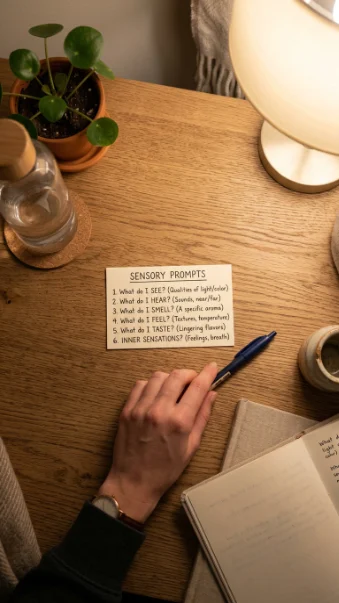
Use the 5-4-3-2-1 sensory method to ground yourself fast. Name five things you see, four you feel, three you hear, two you smell, and one you taste.
This short exercise brings instant presence. You may notice anxiety drop and clarity return. It works well during sudden stress or before a call.
Why This Works (sensory grounding)
- Redirects attention from thought loops to senses
- Reduces acute anxiety in moments
- Quick and portable with no setup
- Helps you reorient to the present
Quick Tips
- Keep a small card with prompts at your desk
- Use it before presentations or calls
- Breathe slowly while you list each item
- Practice twice daily to make it automatic
- Try different senses to suit the moment
5. Morning Journaling Ritual

Write for five to ten minutes when you wake. Note one intention, one worry, and one thing you are grateful for. Keep sentences simple.
Journaling clears mental clutter. You may feel more focused and less reactive during the day. This habit helps you track patterns over time.
Why This Works (reflective writing)
- Helps process emotions and reduce reactivity
- Sets a calm intention for the day
- Reveals thought patterns to help change habits
- Requires little time and supports consistency
Quick Tips
- Use a dedicated journal for short entries
- Write without editing to release thoughts fast
- Keep it by your bed to build consistency
- Pair journaling with a cup of tea
- Review weekly for recurring themes
6. Mindful Eating Mini-Meal

Slowly eat one small snack with full attention. Notice textures, flavors, and smells. Put utensils down between bites.
Mindful eating reduces rushed habits and increases enjoyment. You may appreciate food more and notice fullness cues. Use this practice for meals or snacks.
Why This Works (mindful eating benefits)
- Reconnects you with bodily hunger and fullness signals
- Enhances the enjoyment of food and reduces overeating
- Breaks automatic snacking during stress
- Trains attention to stay present during daily acts
Quick Tips
- Turn off screens during the snack
- Chew slowly and count to 20 if helpful
- Name three flavors you notice
- Start with a single small portion
- Make it a daily mid-afternoon pause
7. Progressive Muscle Relaxation Routine

Tense and release muscle groups from feet to head. Hold each tension for five seconds, then relax. Breathe slowly and steadily through the exercise.
This routine melts physical tension and calms your mind. You may sleep more deeply and feel less stiffness. Make it part of your evening wind-down.
Why This Works (relaxation technique)
- Reduces physical tension and releases stress
- Lowers overall arousal for better sleep
- Teaches awareness of tight versus relaxed states
- Practical for bedtime or after intense days
Quick Tips
- Start with tight shoes off and loose clothes
- Follow an audio guide to keep timing
- Practice three times a week to build the habit
- Combine with a warm drink for deeper relaxation
- Stop if any movement causes pain
8. Short Yoga Flow for Calm

Flow through gentle poses for ten minutes. Focus on linking breath to movement. Include slow sun salutations and hip openers.
Yoga soothes the nervous system and increases body awareness. You may notice improved posture and mood. This routine fits morning or after-work breaks.
Why This Works (mindful movement)
- Releases tension in hips and shoulders
- Encourages breath coordination and calm
- Strengthens mind-body connection
- Low time commitment for daily practice
Quick Tips
- Use a short recorded sequence to follow
- Wear flexible clothes and warm the body first
- Move slowly and avoid forcing poses
- Practice near a window for natural light
- End with two minutes of seated breathing
9. Guided Imagery Visualization

Close your eyes and picture a peaceful place in detail. Use all senses to build the scene. Stay there for five to ten minutes.
Guided imagery reduces anxiety and improves mood. You may access calm quickly during stress. Make it part of your mental self-care toolkit.
Why This Works (visual relaxation)
- Shifts attention away from worries
- Activates calming associations in the brain
- Quick mood improvement with practice
- Works well before sleep or stressful events
Quick Tips
- Use an app with nature-based imagery
- Imagine sounds, smells, and textures clearly
- Practice in a comfortable reclined position
- Choose images that feel safe and pleasant
- Repeat the same scene to deepen the effect
10. Nature Sitting Practice

Sit quietly outside for ten minutes. Observe the sky, air, and natural sounds without judgment. Let thoughts come and go.
Nature sitting calms the mind and restores focus. You may feel more connected and less reactive. This habit is simple and free to practice anywhere green.
Why This Works (outdoor mindfulness)
- Lowers stress through exposure to natural environments
- Improves attention and emotional regulation
- Encourages slow breathing and relaxation
- Easy habit during lunch breaks or weekends
Quick Tips
- Find a consistent nearby spot in nature
- Leave your phone in your bag
- Focus on one sense at a time, like sound
- Bring a light sweater for comfort
- Start with five minutes and increase gradually
11. Aromatherapy Pause

Use a calming scent for a two-minute pause. Inhale slowly from a diffuser or a scented handkerchief. Let the aroma anchor your attention.
Scent evokes quick emotional shifts and calm. You may notice lowered tension and improved mood. Add this to pre-sleep habits or work breaks.
Why This Works (scent and mood)
- Smell links directly to the limbic system for rapid calming
- Simple to implement at home or the office
- Enhances other mindfulness practices
- Non-invasive and short
Quick Tips
- Try lavender, chamomile, or cedarwood
- Use a diffuser with a timer for short bursts
- Keep a small bottle in your bag for travel
- Combine with breathing for a stronger effect
- Test small amounts to ensure comfort
12. Creative Doodling Session

Spend ten minutes doodling or sketching without judgment. Focus on patterns, lines, or simple shapes. Let the mind slow as the hand moves.
Creative doodling reduces mental clutter and boosts presence. You may feel more relaxed and open after a short session. This habit is great for pauses during work.
Why This Works (creative mindfulness)
- Engages the mind without pressure or outcomes
- Reduces rumination by shifting attention to a task
- Encourages a playful, present mindset
- Requires minimal materials and time
Quick Tips
- Keep a small sketchbook at your desk
- Use a timer to commit to ten focused minutes
- Avoid judging the result; focus on movement
- Try repetitive patterns like spirals or waves
- Pair with soft instrumental music if desired
13. Simple Tea or Coffee Ritual

Make a mindful pause during your tea or coffee routine. Notice temperature, aroma, and taste. Take slow sips and breathe between them.
Small beverage rituals slow your pace and center attention. You may feel calmer and more intentional. Turn this into a short daily habit.
Why This Works (ritualized pause)
- Breaks automatic routines with a mindful act
- Uses sensory cues to bring attention to the present
- Creates a reliable mini-break during busy days
- Easy to repeat multiple times daily
Quick Tips
- Use a favorite mug to anchor the ritual
- Stand by a window or sit quietly for the first sip
- Inhale the aroma before tasting
- Limit screen use during the ritual
- Try herbal teas for calming effects
14. Digital Detox Mini-Break
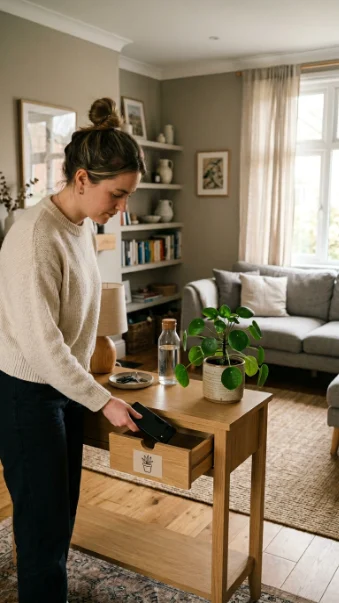
Set a 20-minute no-screen window each day. Use that time for reading, stretching, or walking. Notice the urge to check and let it pass.
Short digital detoxes reduce mental noise. You may experience deeper focus and less reactivity. Build this habit around meals or late afternoons.
Why This Works (screen break benefits)
- Reduces stimuli that fragment attention
- Lowers stress from constant notifications
- Encourages embodied, non-digital activities
- Helps re-establish attention capacity
Quick Tips
- Start with one daily 20-minute block
- Put your phone in another room to avoid temptation
- Use the time for any mindful activity you enjoy
- Track progress to reinforce the habit
- Increase duration gradually if helpful
15. Evening Gratitude Practice
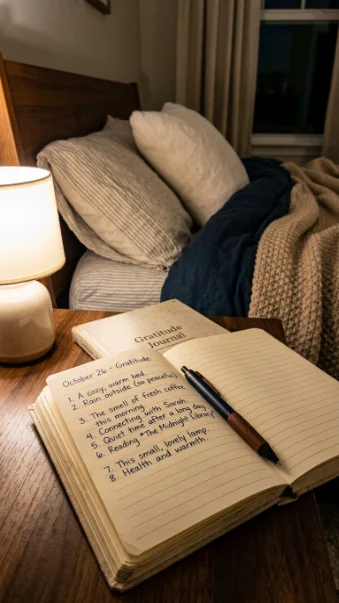
Write three things that went well each day. Keep entries brief and specific. Read old entries when you need a perspective boost.
Gratitude practices shift focus from worry to positive details. You may sleep with a calmer mind and notice more small joys. Make this a gentle nightly habit.
Why This Works (gratitude habit)
- Reframe your attention toward the positives
- Reduces rumination before sleep
- Builds a record of supportive moments
- Requires only a few minutes each night
Quick Tips
- Keep the journal by your bed for consistency
- Be specific, not general, in entries
- Include small wins as well as big ones
- Pair with a short breathing exercise
- Review entries weekly to boost mood
You now have 15 easy mindfulness activities to relax your mind. Each habit is short, practical, and fits into normal days. Pick one or two and try them for a week. Save or pin this list to return to when you need a quick reset. Small routines create steady calm over time, and you can always mix and match ideas that feel right for you.